Context
Four acres carrying six centuries.
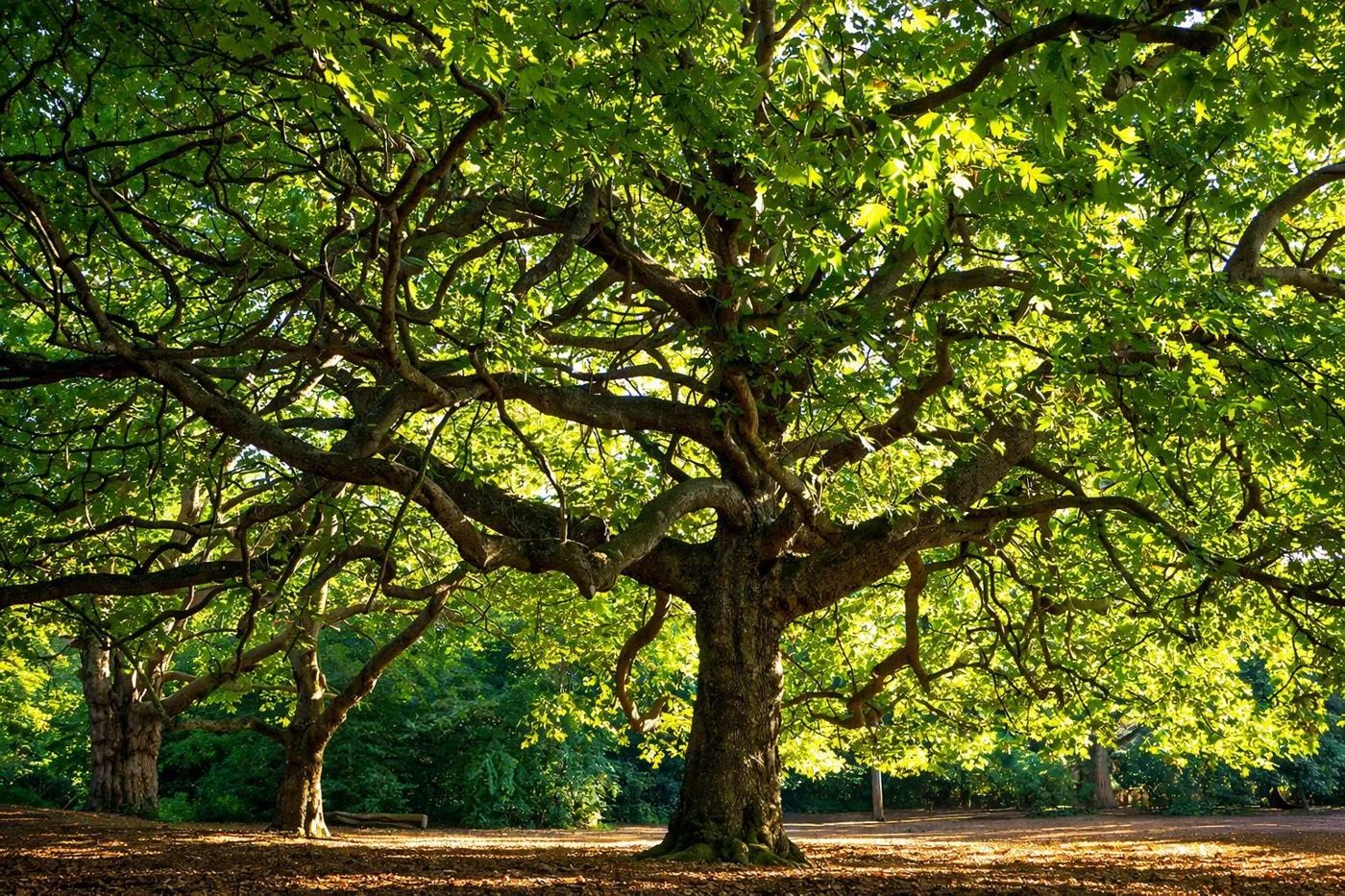
Mycenae Gardens and the adjoining Woodland Dell sit above the Thames in Westcombe Park. The land appears in a deed of 1396, when Thomas Arundell, archbishop of York, granted holdings in East Greenwich to Gregory Ballard. The conveyance was witnessed by Geoffrey Chaucer, who also acted as Ballard's attorney.
In 1776 the financier John Julius Angerstein built Woodlands on the high ground and laid out pleasure grounds counted among the finest of their day. When he died in 1823 the nation bought his art collection, and it became the founding collection of the National Gallery. The villa later passed to the Little Sisters of the Assumption, who kept the gardens for forty years and built a grotto imitating Lourdes. Greenwich Council bought the site in 1967.
What survives is a public open space designated a Site of Importance for Nature Conservation, cared for by a group of volunteers who know every tree on it.
How this began
I joined the committee first.
This was not a commission. I live nearby, I volunteered in the gardens, and I joined the committee of the Friends of Mycenae Gardens. The website came after that, as the thing I could usefully contribute: strategy, design and build, given free.
It has been the most enjoyable work of my year. Six people who know the site intimately, who will happily debate whether an illustration shows the right species of beetle, and who care about the place in a way that makes you want to do good work for them. I would recommend the experience to anyone who builds software for a living.
The principle
Built to be handed over.
The brief I set myself was written down before any code: everything routine must be doable by a committee member, on their own, on a phone, without me. That single sentence shaped every technical decision that followed.
Astro generating a static site, deployed on every change. Sanity for the content the committee edits. Forms to email. Payment links for donations. Serverless functions only where visitor submissions genuinely need writing somewhere, and even then writing into the same system the committee already logs into.
No bespoke authentication, no hand-rolled admin, nothing that needs a developer on call. Hosted, documented services throughout, so the next person to look after this site can pick it up in an afternoon.
Execution
Quiet technology, careful detail.
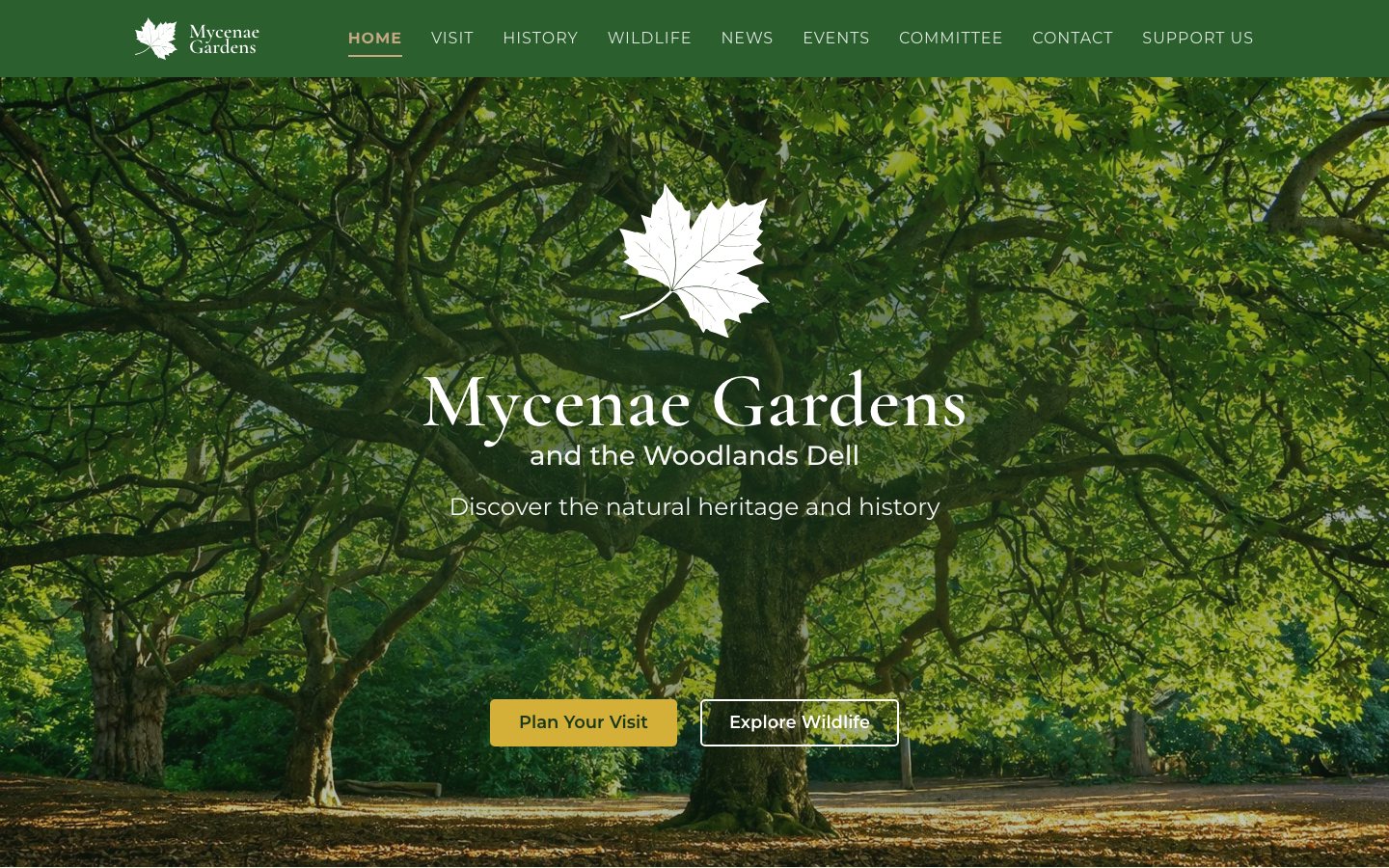
Fonts and images self-hosted. No cookies, no trackers and no consent banner, because there is nothing to consent to: analytics are cookieless and aggregate. The map uses OpenStreetMap tiles rather than an embed that would bring a consent question to a garden website.
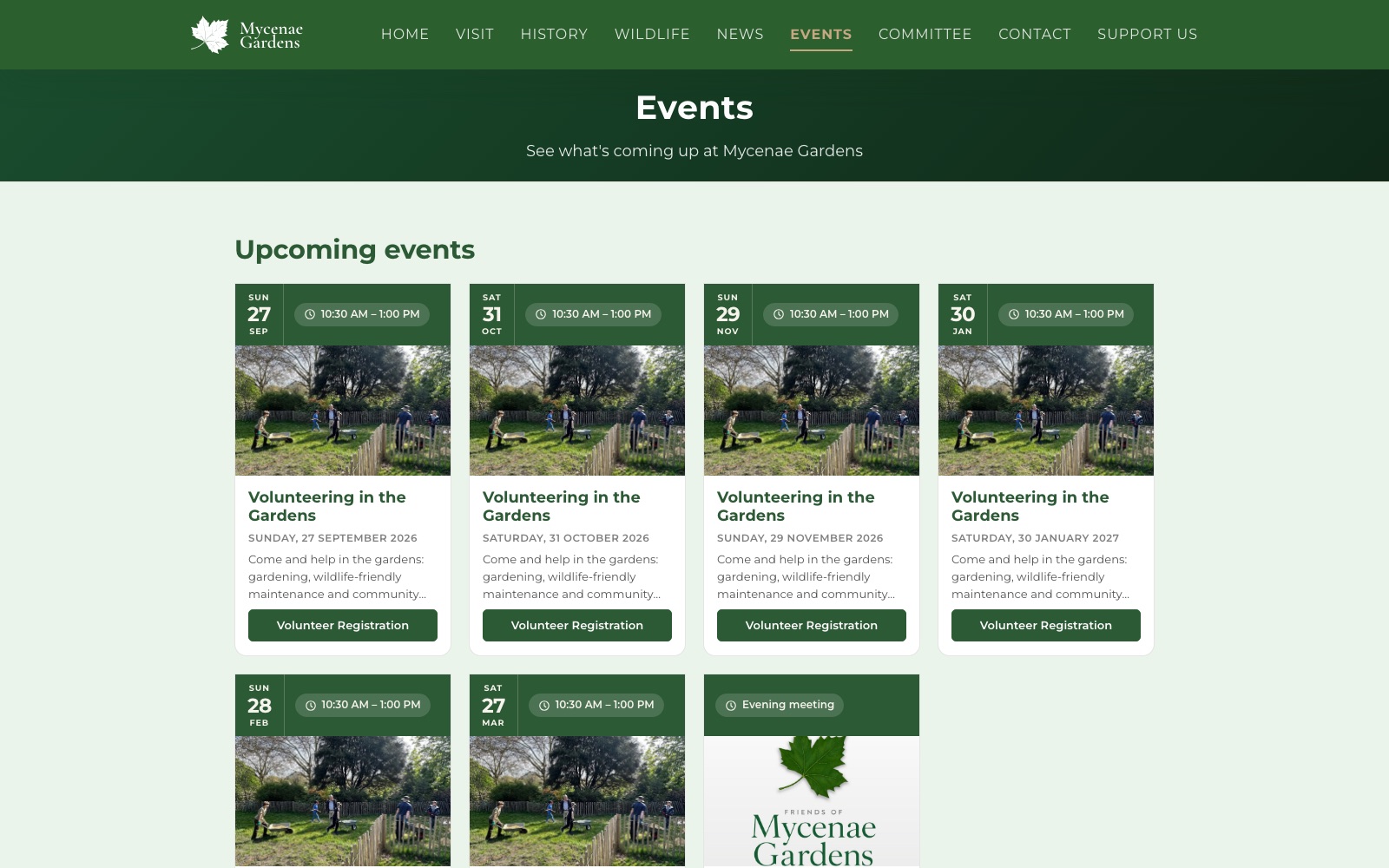
Volunteering dates generate from a rule, the last weekend of each month, alternating Saturday and Sunday so people can make some of them, with December off. The committee can move or skip any single date from the CMS without touching the rule.
The CMS itself is arranged around the jobs the committee actually does, in their words: News stories, Events, Photos waiting for approval, Skip or move a volunteering day. Approving a photograph reads "Approve, show on the website", because that is what the person doing it is thinking.
Outcome
Live, and theirs.
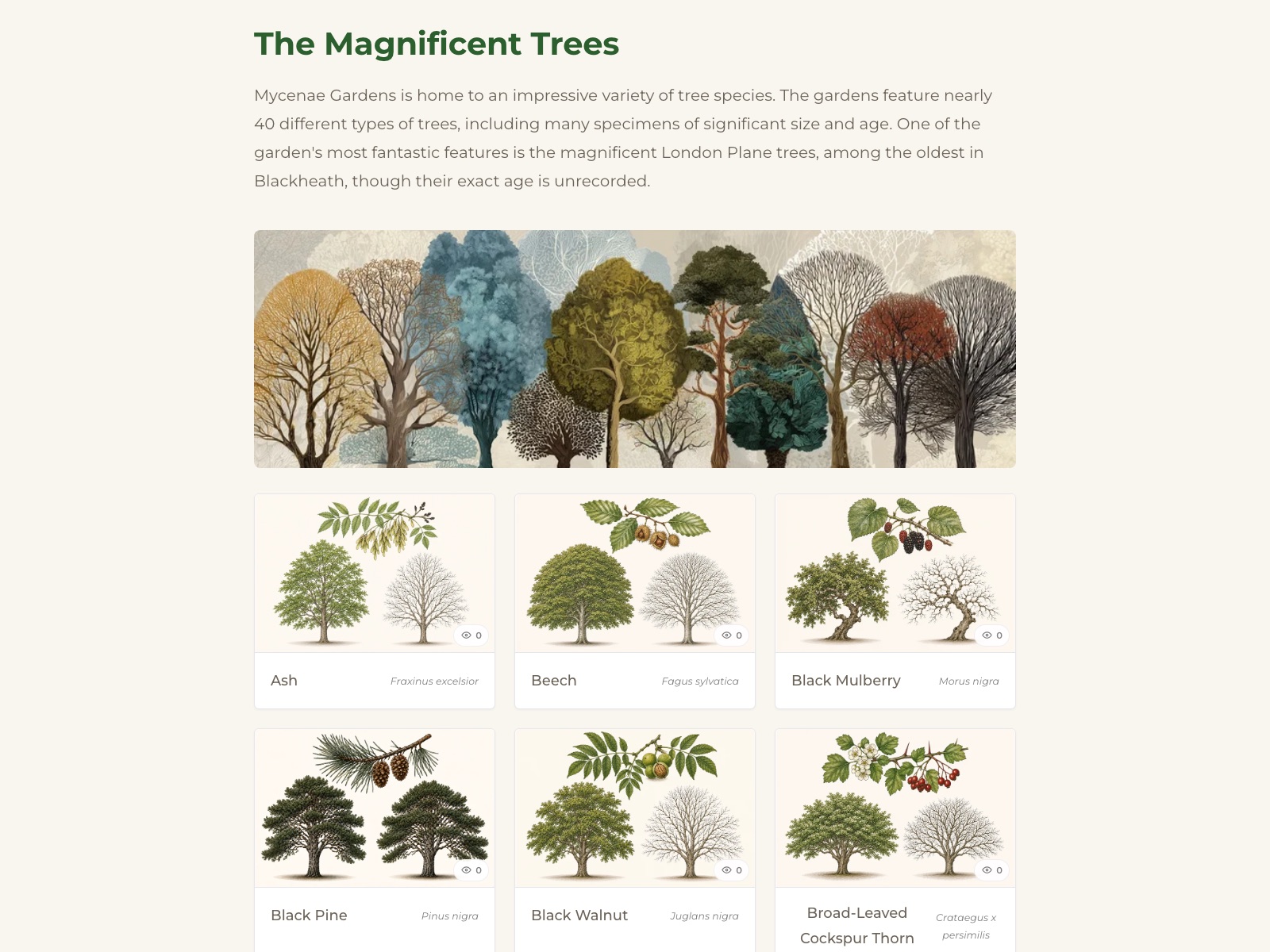
Launched in August 2026, days before the group's biggest event of the year. Seventy eight species with illustrations, the full tree inventory, a history written with the group's own historian, forms landing in a shared inbox with a record of what still needs a reply, card donations, and the papers of the last decade in public.
The committee publishes news, events, species and photographs themselves. Nothing on the critical path needs me, which was the point from the first day.
The stewardship continues quietly since launch. Both domains are verified in Search Console with the sitemap submitted, so the group's pages surface under their own names. The full content dataset, every article, event and species, now exports weekly into version control, so the group's work is never hostage to any single platform. And a small honesty detail I am fond of: a cancelled volunteering day now stays on the page marked Cancelled rather than silently vanishing, because a visitor who saw it yesterday deserves to know what happened to it.
Reflection
Constraints written early do real work.
"It must be handed over" was decided before the stack was, and it kept paying: it ruled out several tempting ideas of mine, including a custom inbox and a bespoke admin, and left something a stranger can run.
The other lesson was mine to learn. Working with volunteers is not like working with a product owner whose job is to answer you, and I started out asking for more decisions than the pace of a community group can absorb. Deciding more myself, reporting clearly and batching the genuine questions made the work move faster and made it more enjoyable for everyone.
The gardens have a second half to this story: a game that turns a walk into a wildlife record.